Imagine being told not only that your child has cancer, but also that the cancer he has is considered the deadliest childhood brain cancer. There is nothing in modern medical science to cure them. Nothing. Every single attempt to save the life of your baby is thwarted by the aggressive nature of the #1 cause of pediatric cancer death – Diffused Intrinsic Pontine Glioma or DIPG.
Charlie, diagnosed with DIPG.
WHAT IS DIPG?
DIPG is a nasty tumor found in the brain stem, specifically the area of the brain at the top and back of the neck, connected to the spinal cord. This tumor grows quickly and invades the healthy brain tissue, weaving itself so thoroughly that removing it is impossible. The aggressive nature of this tumor defies the “normal” science of what a tumor is; a mass of cancerous tissues with defined edges.
DIPG, on the other hand, has soft, non-uniform edges and intertwines itself among healthy brain cells. In essence growing into its own defense mechanism and preventing surgical removal. No surgeon wants to dig through healthy brain tissue, especially on the brain stem. The brain stem controls things like breathing, heart rate and the nerves and muscles that assist in seeing, hearing, walking, talking and eating. Just to give you an idea of how scary the location of these tumors are.
Like all cancerous tumors, it’s terrifying to find out that your child has a tumor in her brain. But also, this one is the worst of the worst: not only completely inoperable, but completely incurable. While DIPG is rare, around 300 children a year are diagnosed with this cancer, it is the most common brain cancer death in children.
COMMON SYMPTOMS
As a mom of a child who battled cancer in her brain, I can tell you without a doubt there are no symptoms out there that compare to the terror of brain stem tumor symptoms:
Headaches primarily in the morning or headaches gone after vomiting
Weakness in facial muscles, drooping, mostly on one side
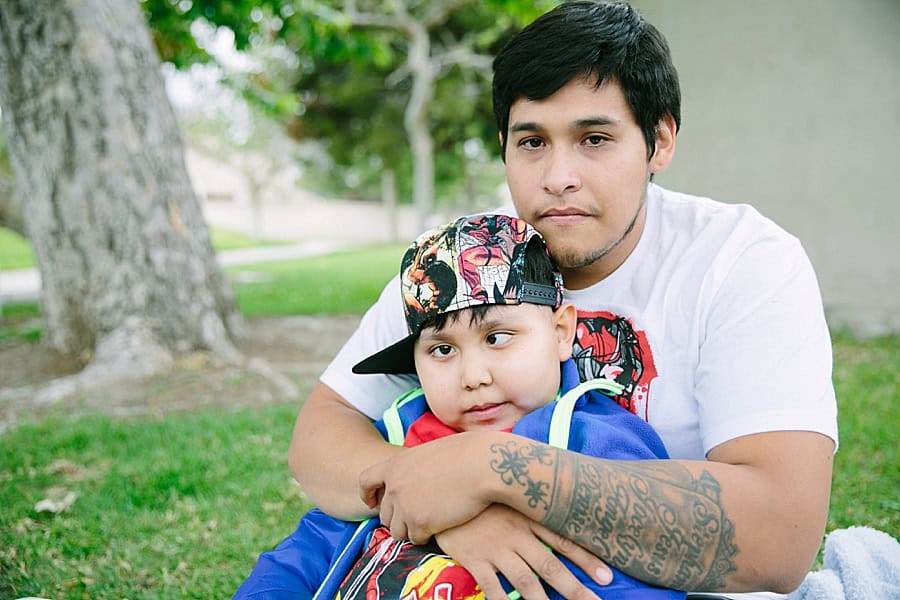
Angel’s his eyes turned inward, he couldn’t speak, and he lost his ability to walk before being diagnosed with DIPG.
Unlike some childhood tumors, DIPG is fast growing and some symptoms may seem to pop up overnight. This is due to the tumor becoming large enough to put pressure on certain areas of the brain stem.
TREATMENT
There is no treatment for DIPG currently. This diagnosis is a heartbreaking death sentence. With the advances made in cancer research in recent years, there is hope that someday soon there will be an effective treatment for DIPG, but right now all doctors and patients can do is experiment. All of the treatment efforts made in the past have resulted only in buying a little bit of time instead of a cure.
Because of the destructive growth and uncommon shape of this tumor, operating on it for biopsy or removal is rare here in the United States. Doctors generally sidestep the practice because the results of the biopsy rarely have an effect on the type or the success of the treatment. The side effects and general risks of operating on any area of the brain tend to outweigh the good.
In Europe, however, advances in technology have garnered a new way to biopsy, called a “stereotactic” biopsy. This combines the sciences of MRI and CAT scans of the brain and tumor with a long, thin needle. Using the scans as a map, the needle is guided into the tumor to extract cells while avoiding critical nerves in the brain. This keeps the risk of damage to the healthy brain tissue lower than a normal biopsy.
Ava’s treatment of DIPG consisted of radiation with an experimental chemo treatment. Though her initial tumor responded well to treatment, more tumors were found in other areas of her body. Ava passed away in November of 2012 after an 11-month battle.
Radiation seems to be the only treatment that comes close to helping, though it in no way resembles a cure. Kids diagnosed with DIPG usually only get a few months – 5 is the median, and radiation therapy can give them as many as three extra months. Can you imagine? Eight months with your baby until the unthinkable happens and no way to cure the disease.
HOPE
Sadly, up until now chemotherapy has had almost zero effect on these gliomas. A study completed by Northwestern University does, however, show some promise on the future of chemo and DIPG. Essentially, mice with gliomas have shown great improvement when treated with a new chemotherapy drug using BET inhibitors. Because of this finding, a clinical trial is currently in the first phases for adults. Northwestern is hoping to open up a clinical trial for children by the end of 2017. This seems to be the only shred of good news concerning DIPG.
While researchers and doctors today have a basic understanding of a few of the genetic mutations causing DIPG, there is a lot of information researchers aren’t privy to. The lack of tissue samples of the tumor, a direct result of the general lack of the practice of biopsy stalls research. Parents of children diagnosed with DIPG can request that a sample of their child’s tumor tissue be donated for research. The more tissue samples we have of this monster, the more information we can learn and better hone the healing procedure to one day have a cure for these little fighters.
TAKE ACTION
Here at The Gold Hope Project, we are striving to raise money for awareness and research of this monstrous malignancy. The DIPG Collaborative is a group of 30 amazing organizations that have come together to facilitate DIPG cancer research and grants. Through this collaborative, we know we can make a huge difference in the understanding of this cancer and, more importantly, the CURE of this cancer. Donations are so needed and so appreciated in the world of sick children. Please visit our donation page to help us help the kids battling DIPG. The value of your donation is life!
To help bring even more awareness to childhood cancer, we at The Gold Hope Project decided to give a platform to all the childhood cancer heroes. Their story in their words.
Brendan
On February 19, 2013 our son, Brendan was sent to Victor Valley Hospital for observation and testing. He was told he had a tumor on his brain stem (DIPG) and was transferred to Loma Linda Hospital for further testing. The neurosurgeons at that hospital said the tumor was inoperable but they could slow the progression with chemotherapy and radiation.
We decided to seek treatment for Brendan thru a trial at Children’s Hospital Orange County (CHOC). Brendan started radiation and chemotherapy on March 14, 2013. We were hoping with treatment that we would be able to get Brendan at least 10 more months of life (the average life span of someone who is diagnosed with DIPG as there is no cure for this type of cancer).
Brendan’s tumor was an extremely aggressive one and did not respond well to the radiation treatments. On March 26, 2013, only 5 short weeks after his diagnosis, Brendan went home to be with Jesus (he was 12 years old). It was completely unexpected however, we know that he is safe in heaven free from suffering and pain. He gets to walk with Jesus every day and we are thankful for the hope that we have that we will get to be reunited with him someday.
Before Brendan got sick, he gave away a Bible to his best friend, Tyler when Tyler moved 6 hours away. They continued to stay best friends even with so many miles between them as they had developed a close bond since meeting in Kindergarten and became best friends right away. After Brendan was diagnosed, he gave away a Bible to his really good friend, Matthew that was given to him by one of our pastors at our church because the words were too small for him to read anymore. He wanted Matthew to know Jesus, too and Brendan wanted to give him a gift that he knew would last for eternity. We thought that this was such an incredible thing for a 12 year old to do. It was obviously something that Brendan cared very much about.
We knew that we wanted to do something that would carry on a legacy for Brendan and to bring glory to God at the same time. As a result of this desire and knowing Brendan’s love for his friends and others knowing the gospel and Jesus Christ as their personal savior, we started the Brendan Pederson Foundation: Brendan’s Bible Blessings, a non-profit charity that gives Bibles away to children who are fighting cancer. We want to show these precious children and their families that there is hope and that hope is Jesus.
We are thankful for the continued prayers as we walk the path that God has set before us. It’s a difficult one but we know that God will give us the strength that we need for each day. It is our prayer that you will gain a renewed faith in God as you follow our journey. Brendan wanted others to know about Jesus and so do we. It is also our prayer that you will know the gospel and believe that Jesus is the son of God, that he died for your sins, that you will accept him into your life and live your life for him so that you may one day go to heaven and walk with Jesus for all of eternity, too. That is something to look forward to!
We love you, Brendan…all the way to heaven and back. We will see you before you know it. ♥, Mom, Dad, and Shelby
Trusting in Him for all things, always – Mitch and Wendy Pederson
Diagnosis and Prognosis – DIPG (Diffuse Intrinsic Pontine Glioma) – Terminal upon diagnosis
How did you discover they had cancer?Over about a month and a half period there were various symptoms such a trouble swallowing, dizziness, and losing function in his right hand (he said he couldn’t write very well and that his hand wouldn’t work right).
What was your perception of childhood cancer before your child’s diagnosis? That it is sad and tragic but that it would never happen to my child and so there really wasn’t a need for me to pay a lot of attention to it. A sad truth I am not very proud of.
What kinds of treatments and procedures has your child been through? Are there any struggles your family faces because of treatment? My son only had 8 radiation and chemo treatments before he died. He died just 5 weeks after diagnosis.
What did you learn about childhood cancer after your child was diagnosed? Was there anything that shocked you about the disease? If there was one thing you wish people could do to help a family with a child battling cancer, what would that be? That a child could be diagnosed with a terminal form of cancer. I knew brain cancer was bad and most of the time deadly but when Brendan was diagnosed I still thought that he could beat it. Somehow my mind and spirit went into a sort of protective mode that wouldn’t allow the terminal diagnosis to sink in. He was going to beat it and as time progressed it became more obvious that he wasn’t going to. So shocking. I’m still in shock and he’s been gone 2 1/2 years.
If there was one thing you wish people could do to help a family with a child battling cancer, what would that be? Be there for them in whatever way that you see that there is a need. Do not wait to be asked, just do.
What do you think about The Gold Hope Project’s mission to bring awareness to childhood cancer through photography? I think that it is an amazing way to help spread awareness but more importantly to bring hope and beauty to the families who are affected by childhood cancers. Having pictures of your child and your family is one of the most desired things that I know I wanted and this project does this for so many families. I love it!
Thank you so much Wendy for sharing Brendan’s story with us. Check out the Brendan’s Pederson Foundation. The Brendan Pederson Foundation is a nonprofit 501c3 organization, IRS identification number 46-4109190. Donations made to The Brendan Pederson Foundation are tax deductible in the U.S. They can be found on Facebook at “Brendan Pederson Foundation: Brendan’s Bible Blessings.
To help bring even more awareness to childhood cancer, we at The Gold Hope Project decided to give a platform to all the childhood cancer heroes. Their story in their words.
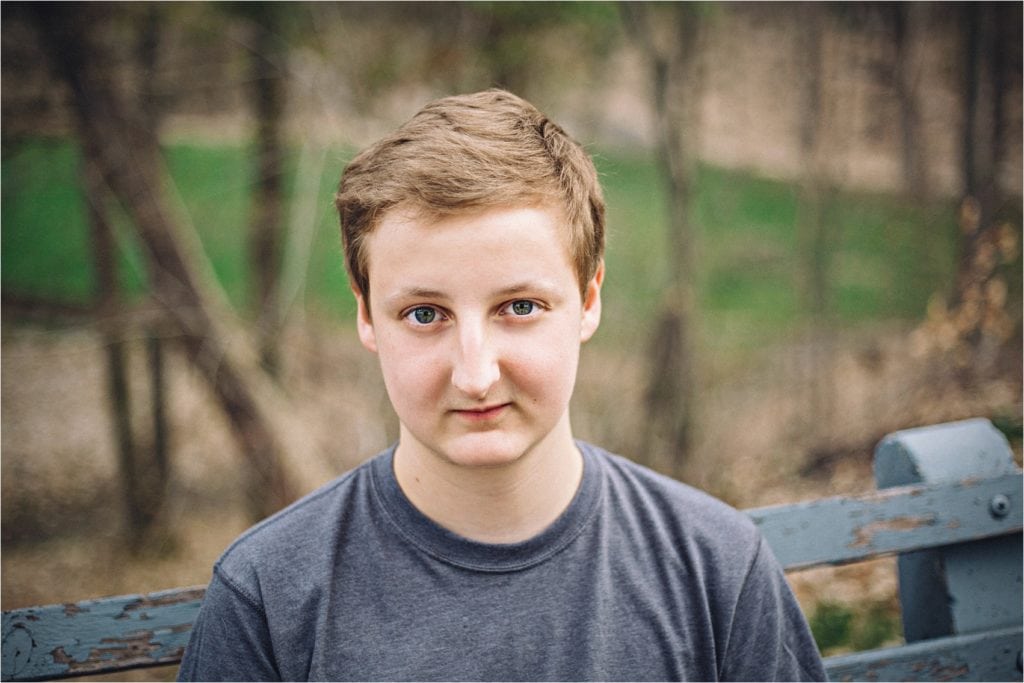
Tyler
Diagnosis and Prognosis – Anaplastic Astrocytoma/ DIPG
How did you discover they had cancer? While trying to take a picture of Tyler with Santa in December of 2014, I noticed he had a lazy eye. I made an appointment with an eye doctor who told me his vision was perfect and that there may be something else going on. He recommended I take Tyler to get an MRI. Within 2 hours they found the lesion on his brain stem.
What was your perception of childhood cancer before your child’s diagnosis? I thought that most cancers had some type of cure. I thought radiation and chemotherapy was a cure. I had never knew of a child that suffered a childhood cancer.
What kinds of treatments and procedures has your child been through? Are there any struggles your family faces because of treatment? Radiation and chemotherapy.
What did you learn about childhood cancer after your child was diagnosed? Was there anything that shocked you about the disease? When we received Tyler’s diagnosis, we were told the best thing to to was to enjoy our son. His prognosis was (fatal and he had) 9-12 months. Here I had a healthy son running around, other than a lazy eye, and now my son was going to die. I was shocked by the lack of treatment options available for kids. You would hear about the different clinical trials and many available to adults or kids over twelve.
If there was one thing you wish people could do to help a family with a child battling cancer, what would that be? I had a great support system, but everyone being around helped as a great distraction to our new life. Whether it was in the hospital or stopping by my house, it made my son and family seem important and made me feel like I had a support system to fight with me in my corner.
What do you think about The Gold Hope Project’s mission to bring awareness to childhood cancer through photography? I believe that any awareness to childhood cancer is needed. We need to get any information out to the public about the number 1 killer of our children age 1-12. Sometimes when seeing a picture of what that child and their family are struggling with will make the situation hit home or become more pertinent.
Thank you Kristen for sharing more about Tyler’s journey!

 59
59